Faerie's Lantern: Halfway Out of the Dark
Lehil shines her moonly lantern on the various festivals that celebrate the depths of winter, and why they mean to spoken across the Star,
FAERIE'S LANTERNCULTURE
Lehil Laruzedah
5 min read
Last moon I explored the themes and experiences of the Hannish festival of lights, Diwali. In that Lantern I said Diwali is one of the earliest festivals of lights of the year, and how common these festivals are across cultures in winter.
I like to think I'm a pretty well-travelled person. I was a soldier and negotiator during the Garlean Wars and I settled into a life as a journalist after my daughter was born - as I've explained at length in this column before. Suffice to say, that's given me a fairly global perspective. Though the Courier is based in Thanalan, I like to think that perspective is carried by our writers and helps you, dear reader, see the world at large. From Mikoso's Out of Water columns to rumors from as far away as Everkeep, we take a truly wide view of the Star. Hells, even my Diwali column was an example of this.
I've seen a lot of cultures, and being trained as a wartime negotiator I've immersed myself in these cultures. The original idea for the Lantern column was a travelogue, in fact... though it's become Lehil Just Talks At You, which I suppose is my right as an Editor-in-Chief. The point is: I really enjoy bringing your attention to customs that probably aren't yours. In that spirit it's time to take a slightly deeper dive on these winter festivals, things I like to call 'halfway out of the dark festivals.' I stole that from a book, don't credit me.
A central theme of these festivities is togetherness and community in the face of mounting darkness. Sometimes that darkness is figurative like with Diwali, but it's also always literal: these celebrations take place as nights are long and the air is cold. They're chances from one culture to another for people to come together, remind one another of the light inside themselves and the day to rise ahead, and more practically ensure the community survives the harshest moons of the year.
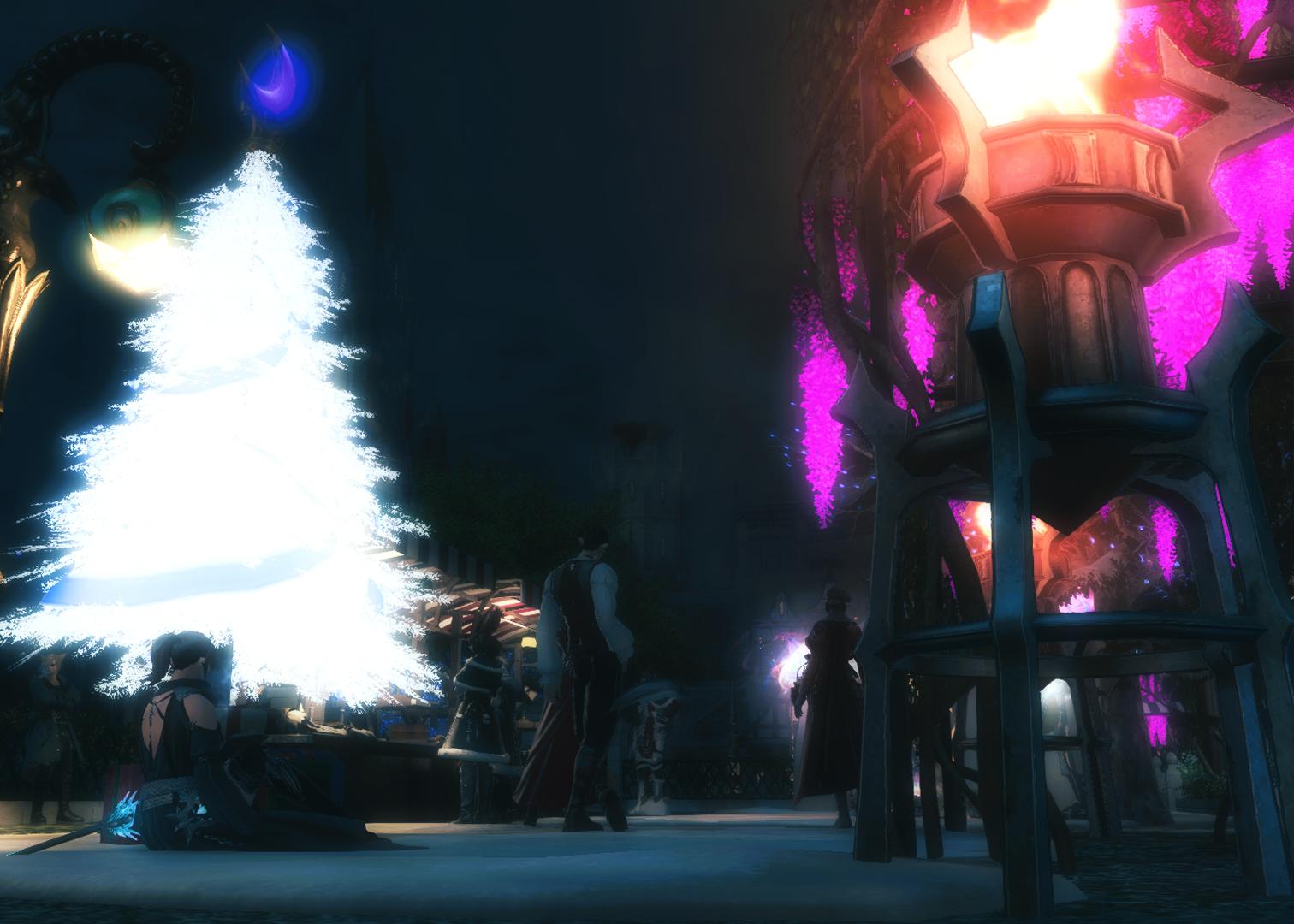
We can start right outside the news office's doors. Many are familiar with the Starlight Celebration. It's the most famous cultural export from Ishgard behind dubious wars and zealotry. To tell the story behind it in short: Ishgardian Knights showed kindness to orphans in the early days of the Dragonsong War and, being Ishgardian, they were punished for that forbidden act of kindness. But the orphans grew up, and they carried that kindness on. Generations later, all of Eorzea recognizes the Starlight Celebration, with a surprising number not knowing it's Ishgardian origin.
It's celebrated by dressing up Coerthan evergreens in lights, giving gifts, and in particular bringing joy to children. Our featured story this moon, about the Great Ishgardian Frostfaire, delves deeper into how people celebrate in Eorzea and how important the festival is to Ishgard itself, and as our readers are largely Eorzean, this holiday probably doesn't need much more explanation.
And to briefly recap Diwali, it is a celebration of light defeating darkness, both figuratively and literally. It plays out across stories of seeking knowledge, a triumph of good over evil, and trying to peer into the fortunes of the year to come. The previous Lantern is a really deep dive on this, so check that out.
Less explored is the Hannish Makara Sankranti, which is celebrated in the first moon of the new year. Makara is dedicated to celebrating the return of daylight and is celebrated with feasts, bonfires, and caroling. People make sweets of sesame and jaggery. The trading of these sweets is meant to symbolize togetherness despite differences and uniqueness of the various races and cultures of Thavnair. Some celebrate with colorful kite flying.
Where Makara celebrates the pending end of the darkest and coldest moons, the Ala Mhigans, ever ready for a challenge, actually dedicate their festival to making winter happen to begin with. For those unfamiliar, Winter's Knell actually beckons on the cold and dark, embracing the end of the year for the birth of a new one.
It also doubles as a warning about the harsh seasons to come. Communities create gigantic snowmen called Fathers Frost and hurl snowballs at Ione another shouting "Winter is coming" as either an announcement of the season or of the impending snowball to your face. Part of that winter preparedness is the prayers for the safety of loved ones in the colder moons Winter's Knell ushers in.
I got to speak recently with a woman from Skatay, Ritz Morningway, who talked to us about Yule, a Skatic winter holiday. As venturing into the Wood is an affront to the isolationist Viera, I have to rely on Morningway here, so forgive any misunderstandings, but as she explains it: Yule is a grand feast across the darkest days of the year. The festival is lit with a great pyre built around a special, significant length of wood to the community called the Yule Log. Additionally, Yule begins the custom of the Wild Hunt, where the ghosts of fallen hunters travel the Wood seeking one final hunt, one final victory. Those who succeed are reborn to hunt again.
I find the combination of ghost stories with winter celebrations particularly natural despite it not being a part of the Starlight Celebration. Winter is dark and dangerous. Food is scarce, making predators desperate. In communities unprepared for a hard winter, everyone shares that desperation. The night is long and full of terrors. Of course there is reason to be afraid, and the notion that a viera caught unaware would be a victim of the Wild Hunt makes a very good cautionary tale, while still having a brightness that a fallen loved one may yet live on by becoming a Wild Hunter.
In Garlemald, Saturnalia is something of a midwinter carnival. The distinctive thing about Saturnalia is a bit of role reversal. During the festivities, the famously strict caste system of Garlemad is turned on its head. Non-citizens and foreign conscripts are treated to a feast, and are able to elect from among them an Emperor who can make festival-related proclamations. Part of the role-play of the role-reversal sometimes involves an element of masquerade. Broader social norms are relaxed as well.
And lastly, Raymi out in Tulliyolal. What once was a festival to one of the sunken gods of Tural is still celebrated today. Even the name of the god has been forgotten, but the festival whose name literally means 'festival' remains a part of the winters of the West. Commonly celebrated with bright, colorful dances, processions and other performances. A fascinating historical note: technically these current iterations of Raymi are considered reenactments of the original festivals with their now-lost religious significance, which means there's a different kind of focus on preserving the traditions of the holiday to honor their ancestors and the roots of the unified Tural that exists today.
While our resident Alexandrian, Lara Eutrepe, said there isn't much in the way of a winter festival in Everkeep, the discussion she and others had about it have led to the planning of a spring festival honoring Queen Sphene til Alexandros, called Queensday. She encouraged our readers to "please look forward to it."
As you might notice, not all festivals share all the themes, but bright colors or lights are a common thread through the holiday, as is commemorating a new year as the days finally start to grow longer again. People check in on one another. They share food. They take care of one another. They huddle together against the dark and bolster their communities because not only did they make it through another year, they finally are seeing daylight come back. They are halfway out of the dark.